| Strategic Growth & Intelligence |
Acquisition, partnership, security and leadership transform an operation ready to scale.
Custom data pipelines that compound enterprise value
Real-time event streams and predictive retention loops that turn one-off sales into deep, embedded account integration.

Building customized data pipelines requires moving beyond standardized ETL (Extract, Transform, Load) frameworks to architect real-time event streams that map every touchpoint across the B2B buyer journey. By ingesting unstructured interaction data — ranging from product usage metrics to high-intent content consumption — organizations can dynamically segment accounts based on propensity to convert. This granular visibility allows sales and revenue operations teams to deploy targeted resources precisely when an account shows intent, dramatically shortening long sales cycles and reducing customer acquisition cost (CAC).
To turn initial acquisitions into compounding enterprise value, predictive system layouts are embedded into post-onboarding workflows to establish self-reinforcing retention loops. Using machine learning algorithms that identify early indicators of churn or operational friction, the platform automatically triggers targeted intervention protocols, contextual product guidance, or proactive customer success outreach. This automated feedback loop keeps users engaged within core workflows, reducing customer drop-off while systematically uncovering upsell and cross-sell opportunities within existing accounts.
Ultimately, these combined capabilities convert volatile top-of-line acquisition efforts into a highly predictable engine for expanding Lifetime Value (LTV). By establishing a structured, data-driven framework for B2B monetization, organizations shift from transactional, one-off sales to deep, embedded account integration — a resilient revenue foundation capable of withstanding broader market shifts.
An agile alternative to mergers and acquisitions
API-driven data exchange and micro-agreements that let two organizations collaborate without merging IT architectures.

Executing a successful tactical partnership hinges on establishing clean, API-driven data exchange layers and modular operational frameworks that allow two entities to collaborate without merging IT architectures. By creating standardized, secure integration environments, partner companies can rapidly co-develop joint go-to-market strategies, bundle complementary service offerings, or share audience access in a controlled setting — eliminating months of integration planning while maintaining absolute operational autonomy.
From a governance and financial perspective, tactical partnerships utilize micro-agreements and outcome-based revenue-sharing models that mitigate long-term structural risk. Traditional M&A demands massive capital allocation, cultural alignment, and extensive regulatory oversight, whereas project-focused alliances operate within clearly defined scopes, timelines, and success metrics. If a joint initiative achieves its targets, it can be extended or scaled; if conditions pivot, the engagement can be dissolved smoothly without liquidating assets.
This agility allows mid-market and enterprise organizations to test emerging verticals and adjacent segments with minimal downside. By leveraging external domain expertise and established distribution networks, companies can validate new product hypotheses in real-world environments — a low-risk lab for commercial growth that ensures capital is deployed only into validated, high-performing expansion channels.
Algorithmic moats that protect margin as automation scales
Continuous monitoring, sanitization and loss-prevention barriers around every AI-driven pipeline.

The rapid integration of AI and automated workflows often introduces stealth liabilities, such as model drift, hallucinated outputs, and unexpected edge-case failures in production environments. Operational Guardians mitigate these risks by establishing continuous monitoring protocols that audit model inputs, outputs, and intermediate embeddings in real time. By benchmarking system behavior against baseline parameters, these algorithmic controls detect anomalies early, automatically rerouting complex or uncertain queries to human operators before operational failures can impact customer experience or breach compliance mandates.
To defend intellectual property and maintain data integrity, AI Guardians construct robust sanitization and loss-prevention barriers around all internal data pipelines. As employees and automated agents interact with public and private Large Language Models (LLMs), these security layers automatically scrub sensitive telemetry, proprietary code, trade secrets, and personally identifiable information (PII) — preventing sensitive company data from being ingested into public training sets or leaked through external API endpoints.
Beyond static security, this defensive architecture acts as an "algorithmic moat" that preserves enterprise gross margins as automation scales across the business. By enforcing strict resource allocation caps, optimizing query efficiency, and maintaining zero-trust architecture across all automated nodes, Operational Guardians ensure that scaling efficiency directly translates into protected profit margins.
Future-proofing leadership and the wider workforce
Visionary workshops and practical AI literacy training that turn friction into active adoption.

Bridging the gap between high-level executive strategy and day-to-day AI implementation requires demystifying the underlying mechanics of modern machine learning, data engineering, and automation. Visionary workshops work directly with C-suite leaders and department heads to break down complex technological jargon into core business language: inputs, outputs, probability distributions, and unit economics — allowing organizations to avoid chasing unfeasible tech hype and focus on high-impact operational upgrades.
Practical AI literacy training extends this clarity throughout the broader workforce, turning potential organizational friction into active employee adoption. When workforces lack understanding of modern automation tools, internal friction, fear of displacement, and low platform usage frequently stall digital transformation projects. Customized training modules show team members how to leverage AI tools as operational multipliers, automating tedious administrative tasks so they can focus on high-value, creative problem-solving.
This cultural shift fosters an agile organization capable of continuously adapting to fast-evolving technological standards. An AI-literate workforce can independently identify operational bottlenecks, propose practical automation use cases, and implement optimizations without needing constant, top-down technical oversight — making digital transformation an ongoing core business process rather than a sporadic, disruptive overhaul.
| Performance, Convergence & Strategic Advisory |
Cost discipline, unified data, edge convergence, market intelligence and carbon strategy transform growth durablity.
Replacing tech vanity experiments with rigorous ROI
A phased audit that prunes redundant software and dismantles legacy technical debt.

Replacing "tech vanity experiments" begins with a rigorous financial audit of an organization's existing technology ecosystem to identify unproductive software investments and redundant SaaS tooling. Many companies accumulate legacy software applications that offer overlapping features, generate excessive maintenance costs, and deliver negligible bottom-line returns. By running every digital tool through rigorous cost-benefit modeling, businesses can pinpoint unproductive applications, consolidate software stacks, and immediately redirect misallocated capital toward core growth drivers.
Concurrently, systematically dismantling legacy technical debt is essential for restoring operational speed and agility. Outdated codebases, fragile custom integrations, and aging hardware infrastructures create hidden costs that drag down developer productivity and increase system downtime risks. Sustainable Performance uses a phased modernizing process, replacing fragile monolithic platforms with modular, API-first microservices — lowering ongoing maintenance overhead and establishing a stable foundation for scaling.
To keep transformation initiatives aligned with commercial goals, execution is anchored by mathematically sound quarterly performance metrics — such as reducing support ticket handling times by a specific percentage or decreasing server compute spend — turning digital modernizing into a predictable driver of margin expansion.
One unified, real-time source of truth
Continuous analytics that replace retrospective reports with proactive, predictive action.

Unlocking the full value of enterprise data requires replacing disconnected, siloed data repositories with a unified, real-time data architecture. When departments operate on isolated software platforms, leadership receives fragmented, often conflicting reports that slow down strategic decisions. By constructing unified data integration layers, information from sales, supply chain, finance, and customer service flows into a single, synchronized source of truth.
On top of this clean data foundation, continuous analytics engines work around the clock to detect operational anomalies, emerging market shifts, and hidden performance trends. Traditional business intelligence relies on retrospective reports that show what happened last week or last quarter; AI-driven intelligence provides real-time operational context and predictive forecasting instead.
This real-time visibility flows directly into automated operational workflows, translating raw data into concrete actions — reordering inventory when stock drops below threshold levels, reallocating ad spend to high-performing channels, or escalating high-risk support tickets to senior specialists.
Edge computing in partnership with Crosser (an AVEVA company)
Processing data where it's generated — on factory floors, in remote facilities, across distributed IoT networks.
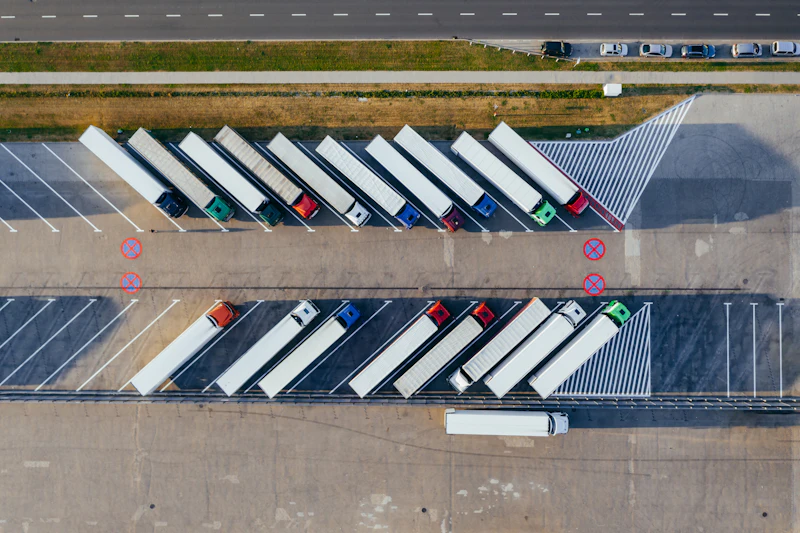
Through our tactical partnership with Crosser (an AVEVA company), organizations can deploy powerful edge computing and real-time streaming analytics directly where data is generated. Processing data at the edge eliminates the need to route massive volumes of raw operational telemetry back to centralized cloud servers — dramatically slashing latency, minimizing cloud storage and bandwidth expenditures, and enabling automated, real-time responses to critical operational events.
| Operational Dimension | Traditional Cloud Processing | Edge-Native Processing (Crosser) |
|---|---|---|
| Data Latency | High — transmits raw data to cloud and back | Ultra-low — processes instantly at the edge |
| Bandwidth Costs | High — continuous bulk telemetry transfers | Minimal — transmits filtered, high-value events |
| System Autonomy | Vulnerable to internet connection drops | Fully operational during network offline periods |
Simplifying complex industrial and enterprise integrations is achieved through a low-code, drag-and-drop orchestration interface that connects modern cloud environments with legacy industrial machinery, bridging Operational Technology (OT) and Information Technology (IT) without expensive, hard-coded software bridges.
This unified operational view directly improves executive decision-making speed. Decision-makers gain instant access to precise performance metrics, equipment health data, and production outputs — optimizing asset usage and reducing unplanned downtime through predictive maintenance.
Digital roadmaps anchored in market reality
Macro-environmental assessments and compliance review that keep technical roadmaps grounded.

To build long-term enterprise value, digital strategies must account for macro-environmental forces such as shifting demographics, evolving labor markets, and geopolitical volatility. Relying solely on short-term tech trends leaves organizations vulnerable to broader economic disruptions. Our advisory practice conducts deep macro-environmental assessments to ensure that modernizing investments are anchored in enduring market demand and insulated against macroeconomic turbulence.
Navigating complex regulatory landscapes and shifting trade policies is another core component of delivering sustainable, structural performance. As global data privacy mandates, cross-border data transfer rules, and regional compliance frameworks become stricter, unaligned technology setups risk heavy financial penalties. Our advisors evaluate every proposed architectural update through a clear risk and compliance lens.
By keeping technical roadmaps closely aligned with core business objectives, we prevent organizations from accumulating ungrounded software overhead. Every proposed tool, platform implementation, or automation project must demonstrate a direct link to improving market positioning, protecting operating margins, or expanding revenue channels.
Turning ESG reporting into a margin driver
Automated carbon accounting across Scope 1, 2 and 3 emissions, embedded directly into operational systems.

Transforming sustainability initiatives into a core driver of business value begins with embedding automated carbon accounting and tracking mechanisms directly into your operational software systems. Manual ESG reporting based on annual estimates and fragmented spreadsheets is often inaccurate, prone to auditing errors, and slow to produce. By automatically pulling utility, supply chain, fuel, and resource data directly from enterprise systems, organizations gain real-time visibility into their overall environmental footprint.
This granular, audit-ready data layer allows companies to construct targeted, ROI-driven resource reduction programs that lower both operational expenditure and environmental impact. Rather than treating sustainability as an unrecoverable corporate overhead expense, this practical approach turns carbon neutrality initiatives into an ongoing source of margin optimization.
Achieving verifiable net-zero targets significantly enhances enterprise resilience, unlocks new green capital streams, and builds strong market differentiation, shielding companies against impending carbon taxes and opening access to specialized green financing.
Not sure which service fits?
Tell us about your operational objectives and we'll map the right combination of services to your business.
Start a Conversation